Reducing Food Waste on Campus
About a third of food produced in the U.S. goes unsold or uneaten (surplus food), and only an estimated 5% of that food is donated or recycled (ReFED). When food gets wasted, all the resources that go into growing, processing, transporting, and preparing each ingredient are also wasted. But it doesn’t stop there: when food degrades in landfills, it emits methane, a potent greenhouse gas.
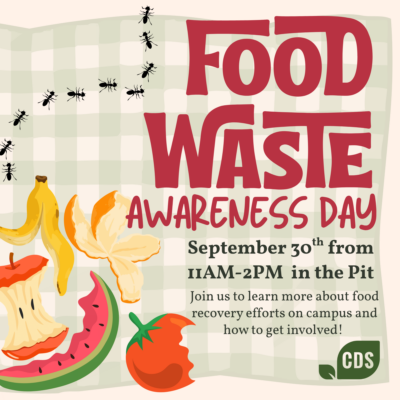
Luckily, there are many strategies for preventing, reducing, and recovering this waste, and both consumers and businesses play an important part in tackling this problem. Learn more about our food recovery initiatives at our Food Waste Awareness Day Event on September 30th, and keep reading to learn what you can do:
The Stats:
- Food waste accounts for 24% of landfill inputs and is the most common material sent to the landfill.
- In foodservice establishments like restaurants and dining halls, an estimated 70% of food waste comes from plate waste, or post-consumer waste.
- In 2024, the average American spent $762 on food that went uneaten.
- Including uneaten groceries and restaurant plate waste, consumer food waste accounts for over 45% of surplus food in the U.S.
- Learn more at ReFED.org and EPA.gov.
Tips for Reducing Food Waste:
On Campus:
- Check our online menus so you know your options when deciding on your meal.
- Use Pick Your Portion in the dining halls to customize your portion sizes to your needs.
- Be mindful when filling your plate: you can always come back for more!
- Compost your food scraps in the Edible Campus or Carolina Community Gardens, or bring them to your residence hall’s waste disposal areas. Make sure to follow guidelines on accepted materials.
- Join the Food Recovery Network, Stomp Out Hunger, or CompostMates to help recover surplus foods!
At Home:
- ReFED’s Food Waste Five is a great framework for managing waste in your kitchen:
- Plan ahead, store properly, use your freezer, learn labels, and eat down.
- Buy ugly: Misfit produce is often wasted due to appearance, but it’s still perfectly safe and delicious to eat! Give that wonky potato some love 😊
- Meal prep with friends: Do you get tired of eating leftovers multiple nights in a row? Team up with a friend and swap leftovers for more variety without the extra effort.
- Donate unopened, unexpired foods to the Carolina Pantry Network or a Chapel Hill Community Fridge.
- Upcycle ingredients that would otherwise be wasted – click here to find recipes and craft ideas for upcycling foods!
Stay tuned for more ideas for food waste reduction, and sign up for our newsletter to learn more.