Creative Upcycling: Painting with Plants!
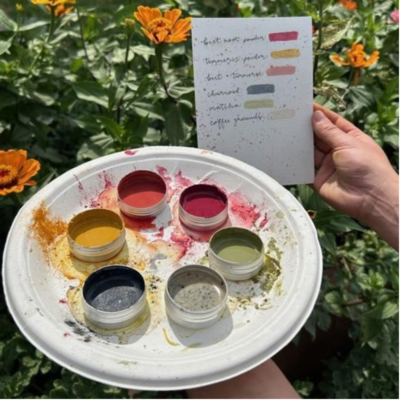
Did you know you can make paints with ingredients you can find in your kitchen or backyard? These plant-based dyes are a low-waste alternative to traditional watercolors and an easy DIY project to give your scraps a second life.
Plants have been used to create dyes for thousands of years, and can create a rainbow of colors depending on the ingredients and preparation. We’ll outline a few methods for creating paints from upcycled foods and other kitchen ingredients, but many of these ingredients can also be adapted to make fabric dye with the right preparation!
Tutorial:
Paint Ingredients:
- Plant materials (powdered or fresh*)
-
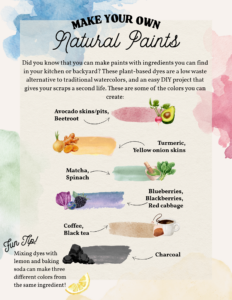
- Red/pink: beetroot, avocado skins/pits
-
- Yellow/orange: turmeric, yellow onion skins
-
- Green: matcha, spinach
-
- Blue/purple: blueberries, blackberries, red cabbage (with baking soda)
-
- Black/gray: charcoal
-
- Brown: coffee, black tea, red onion skins
- Hot water
- Thickening agent (kaolin clay, cornstarch, arrowroot powder)
- Some recipes that use fresh plant materials call for a few drops of glycerin or gum arabic instead.
- Optional: alum (a mordant that prevents fading), clove essential oil (a natural preservative)
- Bonus: adding lemon juice or baking soda can make three different colors from the same ingredient!
- *You can save ingredients like beet tops, overripe berries, or onion skins in the freezer until you’re ready to make your paints!
Materials:
- Paint ingredients listed above
- Tins, jars, or small bowls to hold the paint (you can reuse mint tins or old plastic food containers; see safety note)
- Waterproof tablecloth
- Cardstock paper
- Paint brushes
- Napkins/paper towels
- Plates for brushes
- Water cup
Instructions:
The paint ingredients can be mixed at different ratios depending on what colors/consistency you want, so start small and make some test swatches before committing to a large batch. Add ingredients in small quantities while adjusting the ratios.
- If using powders: Mix about 2 parts plant powder to 1 part thickening agent. Cover with hot or boiling water, adding a few drops at a time and stirring frequently until it reaches the desired consistency.
- If using fresh plant materials:
- Add 1 part plant material to 1 part water, bring to a boil, then simmer for about 20 minutes to extract the dye. Once cooled, the dye can then be strained through a coffee filter or cheesecloth.
- If using alum as a mordant (optional), add 1/2 teaspoon per 2 cups of water before boiling.
- Add thickening agents until paint reaches desired consistency. (If using gum arabic or glycerin, just add a few drops at a time.)
- Optional: Try preparing each dye in 3 separate containers: add lemon to one, and baking soda to the other, and see how the colors change!
- You’re ready to paint!
Safety Notes:
- Make sure any pots, containers, and utensils used to make paints are not reused for food afterward if you used any non-food ingredients (clay, essential oils, alum, glycerin).
- These paints do not have preservatives, so they will only last one to two weeks before they should be discarded. We recommend storing them in the fridge. The color will also fade slightly over time if exposed to sunlight.
Learn More: We adapted this tutorial based on a few of the recipes below, so continue reading if you want additional details!